How the GATE Methodology Connects Decisions and Delivery
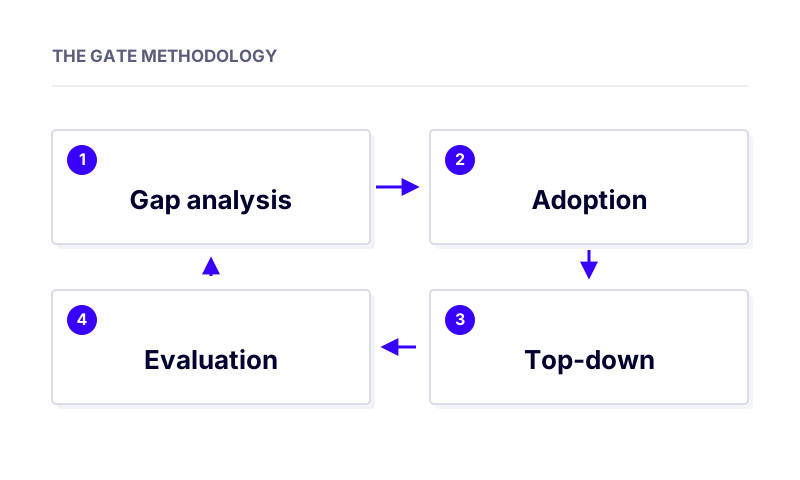
A modernization requirement rarely exists in isolation. It sits alongside current operations, agency requirements, access dependencies and decisions held by different people. Navira Federal’s GATE methodology gives buyers and teaming partners a shared way to discuss those conditions before committing to a technical approach.
Four connected delivery questions
Gap Analysis asks what is preventing the mission need from being met. The constraint may involve capability, coordination, authority or the evidence available to support a decision. Naming the constraint helps keep the discussion focused on the requirement rather than a preferred tool.
Adoption connects the proposed work to applicable federal and agency requirements. The emphasis is applicability: which requirements govern this environment, and which interpretations need resolution by the appropriate customer authority? A general reference to a framework is not a substitute for that determination.
Top-Down connects decision authority to execution. Buyers and partners need clarity about who owns the work, who can approve a decision and how issues move through the appropriate delivery and contractual channels.
Evaluation asks what evidence will inform the next decision. The purpose is to make progress and unresolved conditions visible, then use what is learned to inform the next assessment.
What that means for a COR or CO
A useful discussion should make the proposed scope, deliverables, responsibilities and review points understandable. Navira’s public approach describes acceptance criteria tied to requirements, test results and readiness decisions. Those outputs are tailored to the agreed work; GATE does not replace agency governance, contract terms or designated approval authority.
What that means for a teaming partner
Partners need a clear contribution, workable interfaces and a shared understanding of dependencies. Discuss the technical workshare, responsibility for customer-facing deliverables, access requirements and review responsibilities early. A capability conversation is the start of that discussion, not an agreement on a workshare or a commitment to pursue.
Illustrative discussion: modernization scope
A proposed application change may depend on an access decision outside the engineering team. Identifying that dependency before setting a release commitment gives the customer and partners a clearer basis for scoping the work. The example describes a planning consideration, not a completed Navira engagement.
Bring the mission requirement
Navira provides cybersecurity, modernization, AI governance and mission delivery capabilities. A first discussion can connect your operating context to relevant capabilities and potential delivery outputs. The public capability statement explains the approach at an overview level; engagement-specific methods and implementation details are addressed through the appropriate business discussions.