Making Delivery Accountability Visible
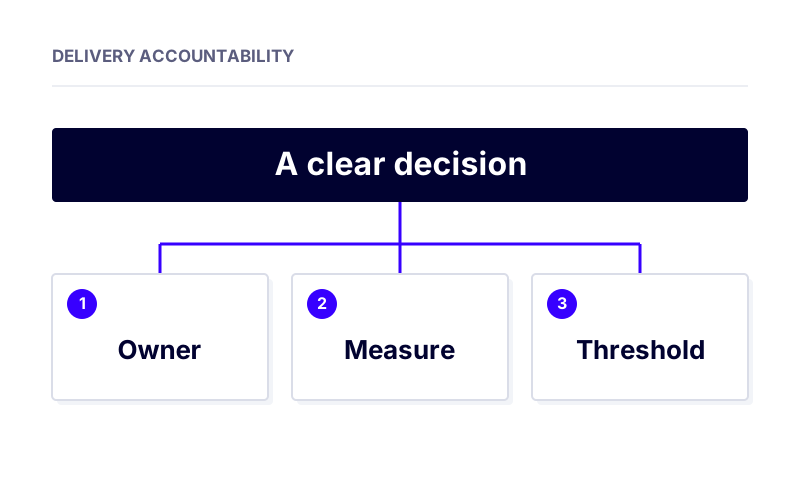
A useful delivery measure helps someone make a decision. For a COR, CO or teaming partner, the important question is not how much activity appears on a dashboard. It is whether the work is meeting the agreed requirement, what evidence supports that judgment and who must act when an issue needs attention.
Start with the decision the evidence supports
Status reporting is most useful when it connects the requirement, the work delivered and the next decision. A completed task does not, by itself, establish acceptance, authorization to release or readiness for operational use. Those judgments depend on the contract, the operating environment and the authority assigned to each participant.
Navira’s public delivery approach connects user needs and requirements to acceptance criteria, test evidence and a readiness review. The purpose is a clear basis for discussion: what is ready, what remains unresolved and what action is needed. The specific evidence and review responsibilities are defined with the customer.
What buyers and partners should be able to ask
- Which requirement or user need does this deliverable address?
- What evidence will support the agreed acceptance or readiness review?
- Who owns the next action, and who has authority to make the decision?
- Which unresolved dependencies could affect scope, access or operational readiness?
- How will a change be documented and routed through the appropriate contract and delivery channels?
Illustrative discussion: release readiness
A team has completed a software change, but agreed acceptance evidence is still incomplete. The delivery conversation should distinguish completed engineering work from the remaining review. The responsible parties resolve the missing evidence and use the applicable approval process before release. This is an illustrative scenario, not a Navira customer result.
Keep delivery and contractual authority clear
Technical coordination, surveillance and contract administration have different responsibilities. Navira’s approach makes decision ownership and escalation visible so the appropriate officials can act within their assigned authority. A delivery discussion does not replace the contract’s change, acceptance or authorization process.
What Navira brings to the conversation
Our GATE methodology connects mission gaps, applicable requirements, accountable owners and evaluation. Our public capability statement also describes quality-control planning aligned to the customer’s quality-assurance surveillance plan, readiness reviews and disciplined change notices. Discuss the relevant outputs and review responsibilities with Navira when scoping your requirement.
Further reading: GAO Agile Assessment Guide.