System owner
- Decision or responsibility
- Owns the system and its priorities, and confirms the as-is picture of how it is built and released.
DevSecOps and secure software delivery
Ship changes to the systems you already run, with the record your officials need to accept each release. Navira Federal, LLC builds, tests and releases on your approved platform. Your officials make the decisions.
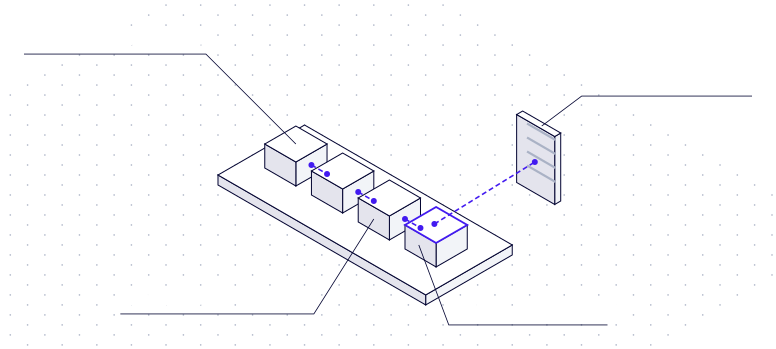
Plan the change around the work people need to do. Navira connects requirements, user workflows, application design and release planning so teams can make informed modernization decisions.
On January 23, 2026, OMB memorandum M-26-05, “Adopting a Risk-based Approach to Software and Hardware Security,” rescinded memoranda M-22-18 and M-23-16. Those memoranda no longer impose a government-wide requirement to collect the common attestation form. An agency may still require it under its own policy or contract.
Each agency head remains responsible for the software and hardware on the agency’s network. Agencies validate their providers’ security using secure development principles and a risk assessment, keep a complete software and hardware inventory, and set assurance policies matched to risk. The attestation form, the NIST Secure Software Development Framework (SSDF) and software bills of materials (SBOMs) remain available for agencies to use, and contracts may ask for a current SBOM on request.
For delivery teams, the practical task is to identify the agency policy and contract requirements that apply to each system. That evidence is most useful when the pipeline produces it on every release, rather than assembling it for a review.
Navira’s decision rule for every release. It is our delivery standard; it does not replace your agency’s applicable requirements or approvals.
Four steps that repeat. Each produces a record your officials use to decide. They apply GATE, Navira’s delivery methodology: identify gaps, use the applicable federal baseline, retain agency decision rights and evaluate the agreed measures.
Step 4 findings return to step 1: what operations learn updates the delivery baseline.
Illustrative example, not a client result
A program office brings in a new delivery team for a case management system already in production. The contract allows a short transition, and the first release is planned soon after.
Agency delegations determine who may approve, accept or direct the work.
| Role | Decision or responsibility |
|---|---|
| System owner | Owns the system and its priorities, and confirms the as-is picture of how it is built and released. |
| Government product owner | Sets the acceptance criteria and accepts or rejects each release. |
| Authorizing official (AO) or delegate | Keeps the authorization decision and the rules for what counts as a significant change. |
| Chief information officer (CIO) and chief information security officer (CISO) | Set the agency’s software assurance policy under OMB M-26-05 and the risk decisions behind it. |
| Platform owner | Approves the platform and pipeline roadmap. Application teams build on what is approved. |
| Contracting officer | Writes the contract terms, including any assurance evidence the agency requires, and makes organizational conflict of interest determinations. |
| Contracting officer’s representative (COR) | Oversight and acceptance support within the written delegation, including readiness at each transition gate. |
Navira staff build, test and release within the roles the contract defines. We do not accept releases, approve platform changes or make authorization decisions on your behalf.
We agree measures with your team: deployment frequency, time from code commit to production, recovery time after a failed deployment, change failure rate and deployment rework rate. These are the five software delivery measures used by DevOps Research and Assessment (DORA).
We also track complete release records and vulnerability deadlines. Where application onboarding is in scope, we track team adoption against the agreed plan. Measures show each team’s progress over time; we do not use them to rank teams or promise results before establishing a baseline.
Release evidence feeds the authorization record, so your authorizing official sees what changed. Explore cybersecurity and authorization.
AI components ship through the same pipeline, with the same record. Explore AI and data.
Code signing and pipeline keys belong in the cryptographic inventory. Explore post-quantum readiness.
No. It rescinded the government-wide requirements in M-22-18 and M-23-16; agency policy and contract requirements still apply. The form, the SSDF and SBOMs remain available, and each agency now decides, by risk, what evidence it requires. Where your agency asks for an SBOM, we produce it from the pipeline on each release.
The fields your agency specifies. Where it has not, we use the CISA 2026 Minimum Elements for a Software Bill of Materials, issued on July 29, 2026. M-26-05 references the 2025 draft. The final 2026 guidance incorporates that consultation and replaces the 2021 minimum elements.
We work on the platform and pipeline your agency has approved. Building or replacing a platform is scoped separately, and the platform owner approves its roadmap.
We use agency-approved coding tools and record the tool, model and version used. AI-generated code is labeled and treated as unverified input: it receives the same tests, scans and review as other code, with human approval for security- or safety-critical changes. Nonpublic code stays out of unapproved tools.
NIST SP 800-218A supplements the SSDF for AI model and system development; it is not a blanket rule for every use of a coding assistant. See AI and Data for AI use cases themselves.
Yes. Step 4 covers transition: every person, process, system, record, credential and decision right gets a named owner, a readiness test and a date, and your team sees readiness every week. Read about operate and transition.
No. The pipeline produces evidence; your authorizing official keeps the authorization decision. See how authorization stays current.
No. We work in your repositories, pipeline and system of record. Tool changes go through your platform owner.
Sources include OMB M-26-05, NIST’s SSDF version 1.1, NIST SP 800-204D on pipeline security, and the 2026 SBOM minimum elements. We apply these with the agency’s policies and contract requirements. NIST lists SSDF version 1.2 as a draft.
Navira Federal, LLC holds GSA Multiple Award Schedule contract 47QTCA25D00B5, including SIN 54151S, Information Technology Professional Services. For prime contractors and teaming partners, we define our workshare by system and named deliverables, such as the delivery baseline, the release record or the transition readiness register. View contract vehicles.
Safeguards
Assurance terms come from your agency’s policy and your contracting officer. On systems we deliver, we meet them and show the evidence. We explain common options in public material, but we do not draft requirements for a contract we may compete for.
Where we team with a technology provider, we say so in writing, and we do not advise on that provider’s selection.
We work in your repositories, pipeline and system of record. Pipeline configurations, findings and security artifacts move only through agency-approved channels.
We agree on permitted access, use, retention and handling before receiving agency information.
Start with a defined scope
A paid, fixed-price review of one system. You receive a map of how it is built, tested and released today, who owns each step, the blockers to a safe release and a ranked list of improvements.
It is not a security assessment, and it does not accept or authorize anything. We may pursue follow-on delivery work at your agency. Where that applies, we disclose it in writing and take no part in writing the resulting requirement. Your contracting officer screens organizational conflicts of interest under FAR 9.5.
We can discuss available ordering options, including our GSA MAS contract. Please do not include sensitive information in your inquiry.