Retain
Keep it where it is, for now, with a date to look again.
Cloud, infrastructure and IT operations
Plan what moves. Build and test the platform. Practice recovery, track the bill and support the people who depend on it.
Our approach works within your agency’s approved platforms and contract scope. Your officials keep the decisions.
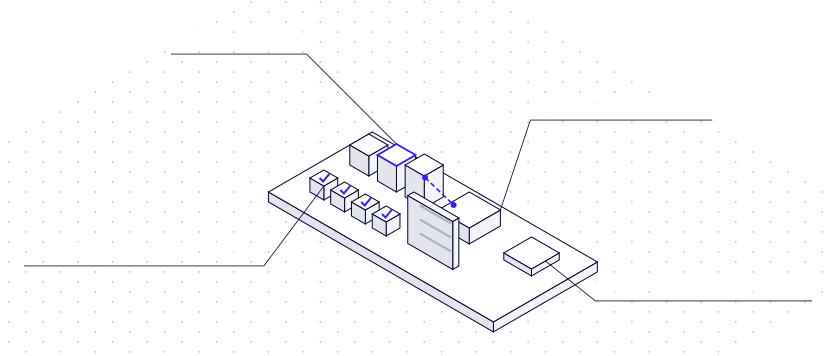
Keep application support connected to change. Navira organizes requirements, maintenance, testing, documentation and transition planning around the functions users depend on.
In June 2026, the Government Accountability Office (GAO) reported that 17 of 24 agencies said controlling cloud costs required changes in IT management. Its cloud procurement report recommended broader use of cloud financial management practices.
A separate GAO cloud security review found full continuous monitoring for three of eight selected systems. Its earlier software license review recommended better tracking and comparison of use against purchases.
These findings point to gaps in cost management, monitoring and license records. Our approach connects those records with placement decisions, recovery tests and support for the people using the services.
The policy baseline is changing. FedRAMP’s 2026 terminology distinguishes cloud service certification from an agency’s authorization decision. OMB memorandum M-26-14 sets a risk-based logging approach for covered systems and rescinds M-21-31. We check applicability with your security team, including separate defense and national security requirements.
Navira’s decision rule for every environment we work on. It is our delivery standard; it does not replace your agency’s requirements or approvals.
Four steps that repeat. Each produces a record your officials use to decide. They apply GATE, Navira’s delivery methodology: understand the customer, align to public federal standards, translate directives into the way we work, and measure outcomes to guide the next decision.
Step 4 findings return to step 1: what operations learn updates what moves next.
Each system gets one of six decisions, made by its owner and recorded with the reason.
Keep it where it is, for now, with a date to look again.
Move it as it is, when speed matters more than change.
Move it with targeted changes, such as a managed database.
Rebuild parts of it to use cloud services, when the mission case supports the cost.
Move to a commercial or shared service that already does the job.
Retire it after the records officer confirms how its records and metadata will be preserved or disposed of.
Illustrative example, not a client result
An agency office runs a dozen systems in an aging data center and must move most of them to an approved cloud platform within its next budget cycle, without losing service for its users.
Agency delegations determine who may approve, accept or direct the work.
| Role | Decision or responsibility |
|---|---|
| System owner | Decides which systems move and where, sets recovery objectives and approves the contingency plan for each system. |
| Platform owner | Sets platform priorities, onboarding rules and the funding or chargeback model. Approves the platform roadmap. |
| Authorizing official (AO) or delegate | Makes the agency’s authorization and risk decisions, including whether the cloud service and inherited controls meet the system’s needs. |
| Chief information officer (CIO) and chief information security officer (CISO) | Set cloud, logging and security policy, and receive security incidents through the agency’s own route. |
| Budget owner or chief financial officer’s office | Sets cost allocation rules, budgets and thresholds, and owns portfolio cost reporting. |
| Contracting officer | Writes the contract terms, including service levels and provider evidence delivery, and makes organizational conflict of interest determinations. |
| Contracting officer’s representative (COR) | Accepts deliverables and readiness within the written delegation. |
Navira staff build, operate and report within the roles the contract defines. We do not accept platforms, approve recovery plans, authorize systems or set service targets on your behalf.
The contract defines the scope and records any exclusions. Your designated officials approve the work; the contracting officer’s representative records acceptance within the written delegation. Missing evidence or approval keeps the step open, with an owner and a date to correct and retest it.
Agree on each measure’s source, method, owner, review date and action when results fall short. Set improvement targets after the baseline exists. Applicable legal requirements and deadlines remain binding while the baseline is being established.
Test the catalog, reports and runbooks with the people who use them. Report feedback in aggregate with the method and respondent count, then assign improvements to an owner.
Hosting class decisions, inherited controls and platform evidence feed the authorization record. Explore cybersecurity and authorization.
Pipelines deploy into the platform, and release records reach the same operations report. Explore DevSecOps.
A program office keeps a migration on one schedule, one risk register and one decision log. Explore program management.
AI workloads land on the same platform, with the same guardrails and cost ownership. Explore AI and data.
No. We work on the cloud platforms and tools your agency has already bought or approved. Provider selection and purchasing stay with your agency.
The ones your agency uses. Where we team with a technology provider on a pursuit, we say so in writing, and we do not advise on that provider’s selection.
Yes, as a defined service. We set up the catalog, intake, routing, tiers and knowledge base with your team, and your agency sets the service levels and approves changes to them.
No. We work in the service management tool your agency runs. Changes to the tool go through its owner.
FedRAMP uses Certification Classes A to D for cloud services. Its Rev5 crosswalk places the former Low and Li-SaaS baselines in B, Moderate in C and High in D; A is a pilot class. Certification describes the evidence available for agency review. It does not authorize your system or replace your impact categorization. Read FedRAMP’s explanation.
From a tested plan. Each system has recovery objectives, a contingency plan and a restore test from an isolated copy, and the plan covers how the provider’s recovery and yours fit together.
Yes. Every person, process, system, record, credential and decision right gets a named owner, a readiness test and a date. Read about knowing the bill and handing over.
Yes. Where several providers run parts of the platform, we supply the reports, operating agreements and incident contacts your service integrator needs, and we work to the integration rules your agency sets.
Navira Federal, LLC holds GSA Multiple Award Schedule contract 47QTCA25D00B5, including SIN 54151S, Information Technology Professional Services. We do not resell cloud services; we work on the platforms and tools your agency approves. For prime contractors and teaming partners, we define our workshare by named deliverables, such as the placement register, the restore test record or the transition readiness register. View contract vehicles.
Safeguards
Placement, hosting class, contingency plans and service targets are your agency’s decisions. We prepare the analysis and the evidence, and we never sign acceptance for the government.
We record the provider evidence, its date and the named agency reviewer, including any gaps that need a decision. We do not certify a provider’s evidence on its behalf.
We do not resell cloud services. Where we team with a technology provider, we say so in writing, and we do not advise on that provider’s selection.
Platform code, runbooks, recovery plans, cost models, catalogs, routing rules and asset and license records stay in agency tools or government repositories. Security incidents go to your security team by a written rule.
We agree on permitted access, use, retention and handling before receiving agency information.
Start with a defined scope
A paid, fixed-price review of one cloud environment. You receive an inventory of accounts and workloads with their owners, the record linking each system’s needs to its approved hosting decision, the evidence behind the last restore test, how spend is allocated, the state of the service catalog and knowledge base, and a ranked list of improvements.
It is not a security assessment or audit, and it does not accept or authorize anything. We may pursue follow-on work at your agency. Where that applies, we disclose it in writing and take no part in writing the resulting requirement. Your contracting officer screens organizational conflicts of interest under FAR 9.5 before we compete for related work.
We can discuss available ordering options, including our GSA MAS contract. Please do not include sensitive information in your inquiry.