Authorizing official (AO)
- Decision or responsibility
- Accepts residual risk, issues the authorization decision and decides whether a system moves to ongoing authorization.
Cybersecurity and authorization
Navira Federal, LLC helps your team keep each system’s authorization current between reviews, with Zero Trust, logging and monitoring data feeding one record. Your officials make the decisions.
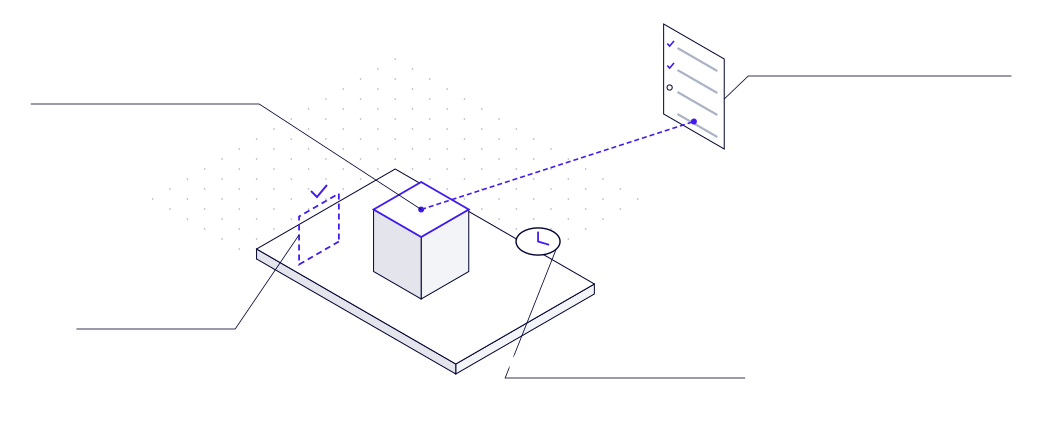
OMB Circular A-130 builds continuous monitoring into the authorization cycle, and NIST SP 800-37 describes ongoing authorization. The hard part is the record between reviews.
System boundaries change. Items in the plan of action and milestones (POA&M) become overdue. Releases need security impact analysis, and renewal schedules can overlap. We keep that record current, in your system of record, so each review starts from what is true today.
Navira’s decision rule, reviewed at each authorizing official briefing. It is our delivery standard; it does not replace the agency’s applicable requirements or approvals.
Four steps that repeat. Each one produces a record your officials use to decide. They apply GATE, Navira’s delivery methodology: identify gaps, use the applicable federal baseline, retain agency decision rights and evaluate the agreed measures.
Step 4 findings return to step 1: what operations learn updates the portfolio map.
Illustrative example, not a client result
A mission area runs eight system boundaries. Three authorizations expire in the same quarter, and one of those systems has a major release planned.
Agency delegations determine who may approve, accept or direct the work.
| Role | Decision or responsibility |
|---|---|
| Authorizing official (AO) | Accepts residual risk, issues the authorization decision and decides whether a system moves to ongoing authorization. |
| System owner | Owns the system, its boundary and the POA&M milestones for it. |
| Information system security officer (ISSO) | Keeps the package and control-owner register current and approves POA&M closures with the system owner. |
| Chief information security officer (CISO) or senior agency information security officer | Sets the security program, the monitoring strategy and priorities across systems. |
| Independent assessor | Tests the controls and reports findings. Never the team that implements or operates them. |
| Privacy officer | Signs off privacy reviews in the package. |
| Contracting officer | Contract terms, changes and organizational conflict of interest determinations. |
| Contracting officer’s representative (COR) | Oversight and acceptance support within the written delegation. |
Navira staff support the ISSO chain. We sign as an ISSO, information system security manager (ISSM) or system owner only when the contract designates the role and your agency appoints the named person in writing.
Zero Trust signals show whether controls keep working between reviews. Signals from the five pillars of the CISA Zero Trust Maturity Model (identity, devices, networks, applications and workloads, and data) become monitoring evidence for the baseline in step 2 and the sustainment record in step 4.
Event logs and security operations outputs do the same. We use them as evidence for the authorization record; your security operations team keeps running them.
The post-quantum readiness section covers inventory, portfolio prioritization and pilot authorization for cryptographic changes. Explore post-quantum readiness
No. FedRAMP’s 2026 rules call a cloud provider’s result a FedRAMP Certification, to keep it distinct from an agency authorization. Your authorizing official still decides how the service is used in your system, and your agency still monitors it. Visit FedRAMP.
No. What many teams call continuous ATO is ongoing authorization. Your authorizing official decides whether a system is ready for it, and that decision is recorded. We prepare the evidence.
No. Where we, our prime or our teammates implement or operate controls on a system, or did in the last two years, none of us assesses that system. We prepare packages for an independent assessor.
No. We work in your system of record, such as CSAM, eMASS or a commercial GRC platform, and it stays authoritative.
The method is agency-neutral. The applicable authorities for each system govern.
Zero Trust data is monitoring evidence. Identity, device and network signals feed the monitoring baseline and the sustainment record, so the authorizing official sees whether controls keep working.
Applicable sources include NIST SP 800-37 Rev. 2 and SP 800-137, OMB Circular A-130 and FedRAMP’s current rules, together with agency implementation and system-specific requirements. National security systems follow their applicable authorities.
Navira Federal, LLC holds GSA Multiple Award Schedule contract 47QTCA25D00B5 (SINs 54151S, OLM and 54151HACS), including the Highly Adaptive Cybersecurity Services SIN. For prime contractors and teaming partners, we define our workshare by system boundary and named deliverables, such as the portfolio map, monitoring baseline or authorization package. Assessment independence applies to the whole team. View contract vehicles.
Safeguards
Where we, our prime or our teammates implement or operate controls on a system, or did in the last two years, none of us assesses that system. We state our role on each system in writing.
Where we team with a technology provider, we say so in writing, and we do not advise on that provider’s selection.
We work in your GRC system of record. System security plans, findings and POA&M details move only through agency-approved channels.
We agree on permitted access, use, retention and handling before receiving agency information.
Start with a defined scope
A paid, fixed-price review of an agreed number of system boundaries. You receive a portfolio map, a renewal calendar, a POA&M health summary and a ranked list of systems ready to move toward ongoing authorization.
It is not a control assessment, and it does not authorize any system. We may pursue follow-on authorization support work at your agency. Where that applies, we disclose it in writing and take no part in writing the resulting requirement. Your contracting officer screens organizational conflicts of interest under FAR 9.5.
We can discuss available ordering options, including our GSA MAS contract. Please do not include sensitive information in your inquiry.