Who owns each control?
Every control has a named owner who accepts the assignment, including common controls inherited from shared services.

Step 02 of the authorization cycle
Name an owner for every control, set what is monitored automatically and how often, and agree the measures your authorizing official will use.
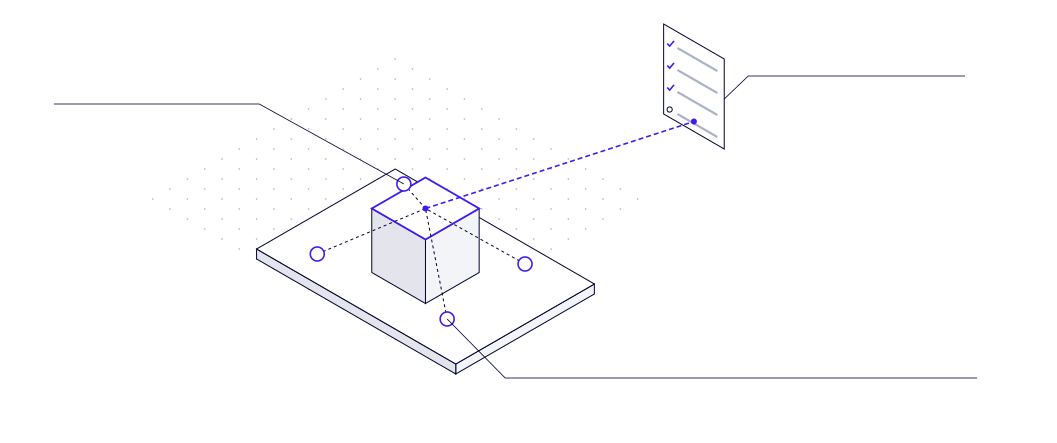
The information security continuous monitoring (ISCM) strategy, described in NIST SP 800-137, is the record behind the baseline. It lists each control’s owner, the monitoring method and frequency, the data source and the threshold that triggers action.
Operational verification is not independent assessment. Automated results from the team operating the controls cannot close an audit finding or a plan of action and milestones (POA&M) item, or serve as assessment evidence for ongoing authorization, unless the customer’s independent assessor owns the method and validates the results. Agency officials retain closure and authorization decisions.
Illustrative measures, not results we promise
Pair a measure of how people use the process with a security or delivery outcome. Agree at least three pairs:
For each pair, record the owner, source, collection method and decision rule. Agree a baseline due date and establish the baseline before setting targets.
Every control has a named owner who accepts the assignment, including common controls inherited from shared services.
Vulnerability scans, configuration checks, event logs and Zero Trust signals, each tied to the controls it supports.
Set the frequency by risk and by what the data source can support. Record who may change it.
Use the paired measures above to check whether people can use the process and whether the security or delivery outcome meets the agreed target.
Specify the monitoring deliverables and their cadence, the governance, risk and compliance (GRC) system where they are recorded, and who may change a monitoring frequency.
Keep tool operation and monitoring analysis separate from independent assessment.
The authorizing official (AO) or designated delegate approves the ISCM strategy. Control owners accept their assignments. The information system security officer (ISSO) keeps the control-owner register current.
Safeguards
Where we, our prime or our teammates implement or operate controls on a system, or did in the last two years, none of us assesses that system. Read our safeguards and the authorization health review.