Browse AI and Data steps
AI and Data
Keep the AI you already run documented, accountable and ready for its next review.
Navira helps your team assemble the data, contract and authorization records each AI use needs. Your officials make the decisions.
Business systems and workflow integration
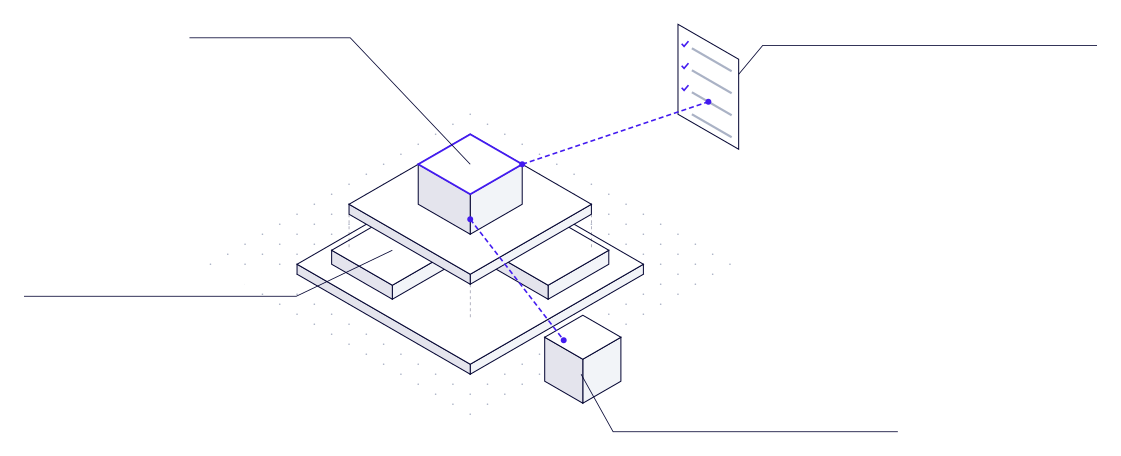
Connect system changes to business needs. Navira supports requirements and change coordination, release planning and user support across business-system workflows.
Six conditions for production and continued use
Navira’s decision rule applies at go-live and at each operating review. It is our delivery standard; it does not replace the agency’s applicable requirements or approvals.
One operating cycle, with a record at every step
Four steps. Each one produces a record your officials use to decide.
- 01Data foundationCan this data support this use?RecordData readiness recordAgency decidesChief Data Officer (CDO) and data owners
- 02Use-case portfolioWhich uses matter, and is any high-impact?RecordUse-case decision registerAgency decidesChief AI Officer (CAIO) or delegate, with the program owner
- 03Acquire, build and authorizeDo the contract and the tests support a decision?RecordAcquisition and decision packageAgency decidesContracting officer and authorizing official
- 04Operate and improveIs it still working, and what changed?RecordOperating review and change recordAgency decidesProgram owner and authorizing official
Step 4 findings return to step 1: what operations learn updates the data foundation.
A model changes. The record has to change with it.
Illustrative example, not a client result
An agency already uses an assistant to sort incoming documents for human review. A vendor proposes a new model version during the scheduled operating review.
- Data foundation: check whether document types, access permissions and retention rules have changed. Keep the evaluation set under government control.
- Portfolio: reassess the assistant’s role in the decision. Record the high-impact determination, accountable owner, expected value and review date.
- Acquire and authorize: compare the proposed version with the contract’s change terms. Run agreed tests, document limitations and route the evidence to the authorized officials.
- Operate and improve: the agency decides whether to adopt, defer or reject the change. Monitor the approved version and retain a manual sorting process. Feed observed errors back into the data record.
The inventory entry points to the applicable contract clause, authorization record and next review date.
Your officials keep the decisions
Agency delegations determine who may approve, accept or direct the work.
Scroll horizontally to view all columns.
| Role | Decision or responsibility |
|---|---|
| CAIO or delegate | AI governance, high-impact determinations and applicable risk-management decisions. |
| CDO and data owners | Data governance, stewardship, access and fitness for the intended use. |
| Chief Information Officer (CIO), Chief Information Security Officer (CISO) and authorizing official | System boundary, security assessment and authorization. The designated authorizing official accepts system risk. |
| Privacy and records officers | Privacy review, applicable notices and assessments, retention and disposition. |
| Program owner and technical lead | Mission acceptance criteria, operational limits, human review and the fallback process. |
| Contracting officer | Acquisition terms, contractual changes and conflict-of-interest determinations. |
| contracting officer’s representative (COR) | Oversight and acceptance support within the written delegation. Contract changes stay with the contracting officer. |
CAIO or delegate
- Decision or responsibility
- AI governance, high-impact determinations and applicable risk-management decisions.
CDO and data owners
- Decision or responsibility
- Data governance, stewardship, access and fitness for the intended use.
Chief Information Officer (CIO), Chief Information Security Officer (CISO) and authorizing official
- Decision or responsibility
- System boundary, security assessment and authorization. The designated authorizing official accepts system risk.
Privacy and records officers
- Decision or responsibility
- Privacy review, applicable notices and assessments, retention and disposition.
Program owner and technical lead
- Decision or responsibility
- Mission acceptance criteria, operational limits, human review and the fallback process.
Contracting officer
- Decision or responsibility
- Acquisition terms, contractual changes and conflict-of-interest determinations.
contracting officer’s representative (COR)
- Decision or responsibility
- Oversight and acceptance support within the written delegation. Contract changes stay with the contracting officer.
Why the operating record matters
GAO reviewed generative AI use at 12 agencies. Officials cited complying with existing federal policy, maintaining up-to-date use policies as the technology evolves, and securing technical resources and budget. See GAO-25-107653 (July 2025).
We connect each use case to its data record, contract terms, authorization evidence and scheduled review, so the record shows what changed, who decided and what operators do next.
Questions agency teams and partners ask
Why do you use both AI and SI?
AI is the familiar industry term. Executive Order 14434 directs executive agencies to use “Super Intelligence” and “SI” in covered communications, subject to law, and cross-references the existing statutory AI definition. We use the terminology required by the agency and the solicitation. Read Executive Order 14434.
Does this apply to AI already in production?
Yes. Start with the operating inventory and the next review or proposed change. Existing use still needs an owner, documented boundaries and evidence that the controls remain effective.
Does completing the cycle authorize a system?
No. Contract acceptance, permission to test and production authorization are separate decisions made by the appropriate agency officials.
How do primes and teaming partners work with Navira?
Start with the proposed scope, responsibilities and commercial interests. We document teaming terms and screen conflicts before agreeing to work. We do not advise on the selection of a provider with whom we team.
What policy sources inform the approach?
Applicable sources include OMB M-25-21 for agency AI use and M-25-22 for acquisition, together with agency implementation and system-specific requirements. National security systems follow their applicable authorities. Review OMB memoranda.
Contract information
Navira Federal, LLC holds GSA Multiple Award Schedule contract 47QTCA25D00B5 (SINs 54151S, OLM and 54151HACS). View contract vehicles.
Safeguards
Our interests are disclosed. Your decisions stay yours.
Independent advice within a defined scope
No approval-path advisory work where we have an interest. We disclose downstream commercial interests and decline a portfolio review where we are competing for the resulting implementation.
Where we team with a technology provider, we say so in writing, and we do not advise on that provider’s selection.
Agency information stays under agency control
Agency data does not train any model, and we help your contracting officer put that term in the contract.
We agree on permitted access, use, retention and handling before receiving agency information. Sensitive records move only through an agency-approved channel.
Start with a defined scope
Scope an AI and data portfolio review
A paid, fixed-price review of three to five AI systems in production, typically three to four weeks depending on scope and access. You receive a decision register for each system and a sequencing memo for the portfolio.
To scope the review, identify the production systems and available AI strategy, compliance plan, governance charter, data inventory entries and related contract excerpts. Share sensitive records only through an agency-approved channel.
The review names data, governance and acquisition gaps, accountable owners and next review dates. It does not authorize use or select products, and we offer it only where we are not pursuing the implementation work that follows.
We can discuss available ordering options, including our GSA MAS contract. Please do not include sensitive information in your inquiry.